
Minimally Invasive Joint Pain Treatment
Chronic joint pain does not always lead to surgery. At California Joint Pain Institute in Irvine, California, we treat knee, shoulder, and elbow pain with embolization, an outpatient procedure performed through a pinhole access point instead of an open incision. Rather than replacing or repairing the joint, embolization targets the abnormal blood vessels that carry inflammation into it.
Most patients go home the same day and get back to their normal routine within a few days.
How embolization works
Joints affected by osteoarthritis or long standing tendon and capsule inflammation grow extra tiny arteries. Those vessels feed inflammatory cells into the lining of the joint, which keeps pain and stiffness going. Using live imaging and a thin catheter, your physician reduces blood flow through the specific vessels involved. As the inflammation settles, pain usually eases and movement improves.
Because nothing is cut out or implanted, other treatment options stay open to you later on.
Procedures we offer
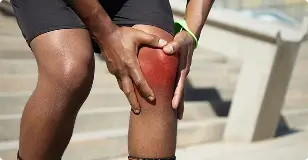
Genicular Artery Embolization (GAE)
GAE is used to treat knee osteoarthritis by
reducing inflammation in the small blood
vessels surrounding the knee joint.

Elbow Artery Embolization (EAE)
EAE is a minimally invasive treatment
designed to help relieve chronic tennis
elbow pain that has not responded to
conservative care.

Shoulder Artery Embolization (SAE)
SAE targets inflammation associated with
frozen shoulder, helping improve comfort
and mobility in the shoulder joint.
What to expect
- Consultation and imaging review to confirm that you are a candidate
- Outpatient procedure, usually one to two hours, with light sedation
- Home the same day, with no hospital stay and no general anesthesia
- A gradual return to daily activity, plus follow up to track pain and function