Learning that you have knee osteoarthritis can be discouraging, especially if the pain has begun to interfere with everyday activities. Climbing stairs, taking a walk, getting out of a chair, or enjoying your favorite hobbies may become increasingly difficult as the condition progresses.
Many people assume that once conservative treatments stop working, knee replacement surgery is the only option. While total knee replacement remains an effective treatment for some patients, it is not the only path forward. Advances in minimally invasive medicine have expanded the range of treatments available, allowing many individuals to explore alternatives before considering major surgery.
If you’re wondering whether knee replacement is your only option, understanding the full spectrum of treatments can help you make a more informed decision.
Understanding Knee Osteoarthritis
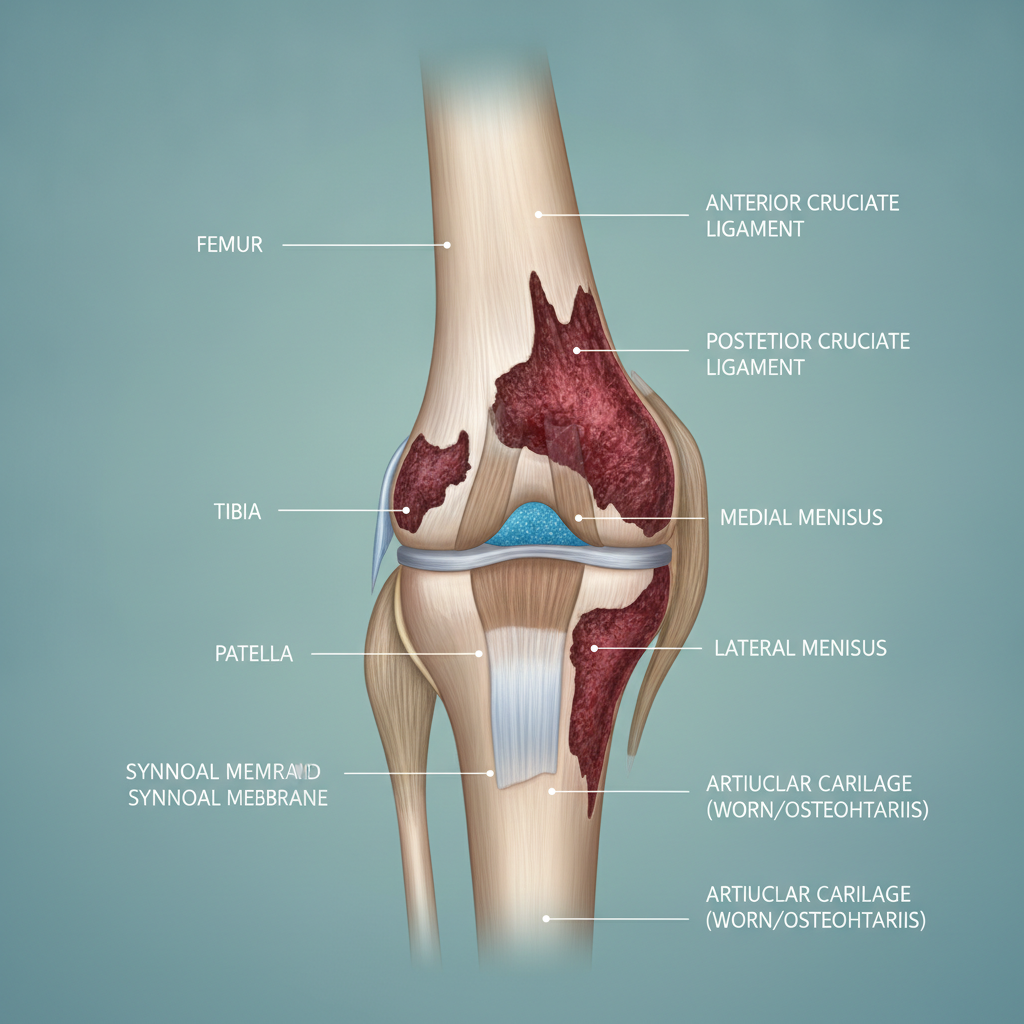
Knee osteoarthritis is a degenerative joint condition that develops as the cartilage protecting the ends of the bones gradually wears away. As the joint changes over time, inflammation, stiffness, swelling, and pain can make movement more difficult.
The severity of osteoarthritis varies from person to person. Some individuals experience occasional discomfort, while others have persistent pain that limits their ability to work, exercise, or perform routine daily tasks.
Because osteoarthritis typically progresses gradually, treatment often follows a step-by-step approach, beginning with the least invasive options.
Conservative Treatments Often Come First
For many patients, the first line of treatment focuses on managing symptoms without surgery.
Common conservative treatments include:
- Physical therapy
- Weight management
- Low-impact exercise
- Activity modification
- Anti-inflammatory medications
- Knee braces
- Corticosteroid injections
- Hyaluronic acid injections
These treatments may help reduce pain and improve function, particularly during the earlier stages of osteoarthritis.
However, while conservative therapies can be effective, they generally do not reverse the underlying joint changes. As symptoms progress, patients often begin looking for additional solutions.
When Conservative Care Is No Longer Enough
Many people reach a point where medications or injections no longer provide lasting relief. Pain may begin affecting sleep, walking, work, or participation in favorite activities.
This is often when patients are referred to an orthopedic surgeon and told that knee replacement may be the next step.
Although knee replacement has helped many people regain mobility, it’s important to remember that it is not always the immediate or only option.
Depending on your symptoms, imaging findings, overall health, and treatment goals, other approaches may still be worth considering.
What Is Knee Replacement Surgery?
Total knee replacement is a procedure that removes damaged cartilage and portions of the knee joint before replacing them with artificial components made from metal and durable plastic.
The surgery is designed to relieve pain and restore joint function for patients with advanced osteoarthritis.
Because it is a major orthopedic procedure, knee replacement typically involves:
- Hospital or surgical center admission
- Anesthesia
- Surgical incisions
- Removal of damaged joint surfaces
- Physical therapy
- Several weeks or months of recovery
For many patients, the results can be excellent. However, surgery also requires a significant commitment to rehabilitation and recovery.
Why Some Patients Prefer to Delay Surgery
Even when knee replacement is recommended, not everyone is ready to undergo major surgery.
Some patients hope to:
- Stay active without replacing their natural joint
- Avoid a lengthy recovery period
- Reduce the risks associated with surgery
- Continue working with minimal interruption
- Explore less invasive treatments first
For these individuals, newer minimally invasive procedures may provide another option to discuss with their physician.
A Minimally Invasive Alternative: Genicular Artery Embolization
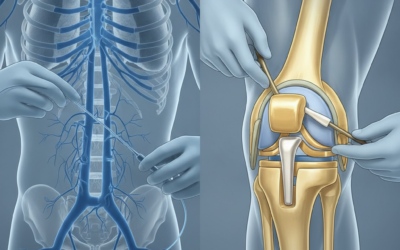
One of the newest treatment options for certain patients with knee osteoarthritis is Genicular Artery Embolization (GAE). Unlike knee replacement, GAE does not remove or replace any part of the joint. Instead, it focuses on one of the factors contributing to osteoarthritis pain: chronic inflammation.
Research has shown that osteoarthritic knees often develop small abnormal blood vessels around the inflamed joint lining. These vessels are associated with ongoing inflammation and pain.
During GAE, an interventional radiologist uses advanced imaging to guide a small catheter to the arteries supplying these inflamed tissues. Tiny embolic particles are then used to reduce blood flow through the abnormal vessels, helping decrease inflammation while preserving the natural knee.
Because the procedure is performed through a tiny catheter rather than a surgical incision, it is considered minimally invasive.
Comparing GAE and Knee Replacement
Although both treatments aim to reduce pain and improve function, they work in very different ways. GAE focuses on reducing inflammation while preserving the natural joint. Knee replacement removes the damaged joint surfaces and replaces them with artificial implants.
GAE is typically performed in an outpatient setting with no large incisions, while knee replacement involves hospitalization or a surgical center, larger incisions, and a more extensive recovery process.
Recovery after GAE is generally shorter than recovery following knee replacement, although individual experiences vary. For some patients, GAE may provide meaningful pain relief and help delay or avoid joint replacement. Others with more advanced structural damage may still benefit most from surgery.
Who May Be a Candidate for GAE?
Every patient is different, and candidacy depends on several factors.
GAE may be considered for individuals who:
- Have knee osteoarthritis confirmed through imaging
- Continue to experience pain despite conservative treatment
- Want to explore minimally invasive alternatives
- Hope to delay knee replacement if appropriate
- Are not ideal candidates for surgery due to certain medical conditions
A comprehensive evaluation is necessary to determine whether GAE is an appropriate option.
When Knee Replacement May Be the Best Choice
Although minimally invasive treatments are expanding, knee replacement remains an important option for many patients.
Individuals with severe joint destruction, significant deformity, or advanced mechanical instability may benefit more from replacing the damaged joint than from inflammation-focused therapies.
Rather than viewing knee replacement as something to avoid at all costs, it should be considered one tool among many available treatment options.
The goal is to choose the treatment that best matches the patient’s condition, symptoms, and long-term goals.
Questions to Ask Before Deciding
If you’re considering treatment for knee osteoarthritis, discussing the following questions with your physician can help guide your decision:
- How advanced is my osteoarthritis?
- Have I exhausted appropriate conservative treatments?
- Am I a candidate for minimally invasive procedures like GAE?
- What are the expected benefits and limitations of each option?
- What does recovery involve?
- How might each treatment affect my daily activities and long-term mobility?
Having these conversations can provide greater clarity and confidence as you move forward.
The Importance of a Personalized Treatment Plan
No two patients experience knee osteoarthritis in exactly the same way. Factors such as age, activity level, overall health, symptom severity, and personal goals all influence which treatment may be most appropriate.
For some individuals, physical therapy and lifestyle changes remain highly effective. Others may benefit from minimally invasive procedures that target chronic inflammation. Patients with more advanced joint damage may ultimately achieve the best results through knee replacement surgery.
The key is finding a treatment plan that reflects your unique needs rather than assuming there is only one solution.
Explore Your Options Before Deciding
If you’ve been told that knee replacement is your next step, it may be worthwhile to learn about all of the treatment options available. Advances in minimally invasive medicine have created new possibilities for many people living with chronic knee pain.
At California Joint Pain Institute, we specialize in evaluating patients with knee osteoarthritis and providing advanced, image-guided treatments such as Genicular Artery Embolization. Our team works closely with each patient to determine whether a minimally invasive approach may be appropriate based on their condition and goals.
If chronic knee pain is limiting your mobility or quality of life, contact us today to schedule a consultation and learn more about your treatment options. Together, we can help you explore a personalized path toward lasting relief.