You do not have to experience a sudden injury to develop significant elbow pain. In many cases, the problem develops gradually after performing the same movements over and over again. Activities at work, sports, hobbies, and even everyday household tasks can repeatedly stress the muscles and tendons around the elbow.
So, can repetitive motion cause elbow damage? Yes. Repetitive stress can contribute to overuse injuries affecting the tendons and other structures around the elbow. One of the best-known examples is tennis elbow, a painful condition that frequently affects people who have never picked up a tennis racket.
Understanding how repetitive movements affect your elbow can help you recognize symptoms earlier, modify activities that may be contributing to the problem, and know when persistent elbow pain deserves further evaluation.
How Does Repetitive Motion Affect the Elbow?
Your elbow allows you to bend and straighten your arm while also helping the forearm rotate. Muscles and tendons surrounding the joint make many of these movements possible.
Most everyday activities are not harmful on their own. Problems can develop when a movement is performed frequently enough that the tissues do not have adequate time to recover.
Repetitive gripping, lifting, twisting, and wrist movements can continually load the muscles and tendons of the forearm. Over time, accumulated stress may contribute to changes within the tendon tissue and cause pain during activities that previously felt comfortable.
This is generally considered an overuse injury rather than a single traumatic injury.
What Is Tennis Elbow?
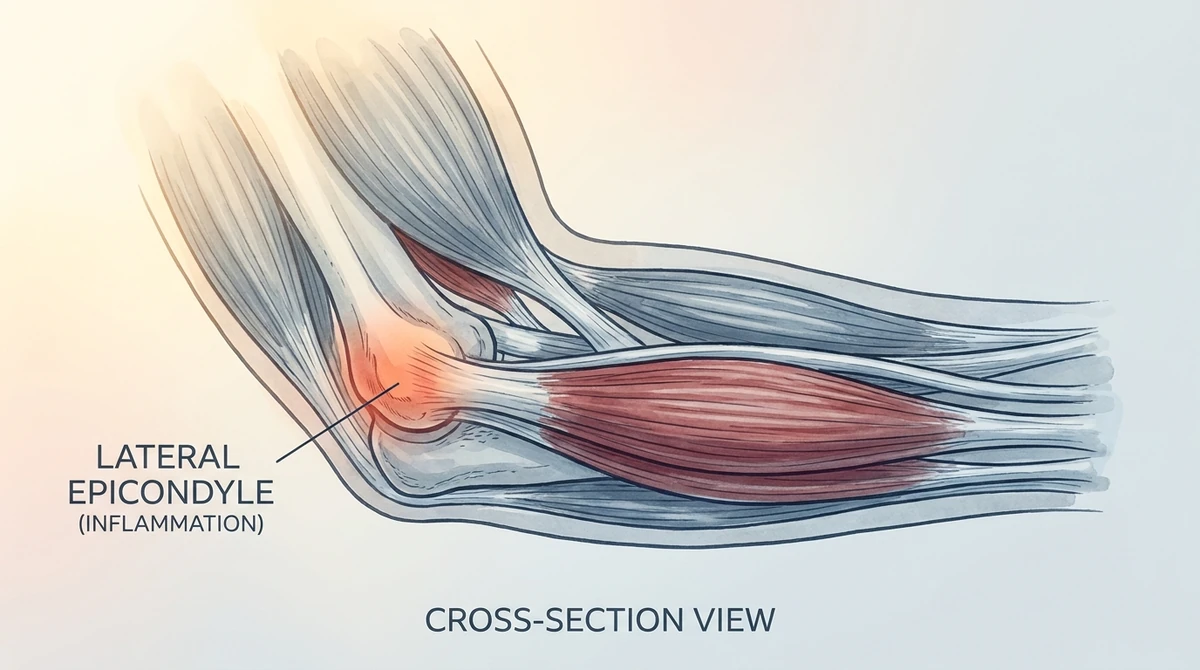
One of the most common repetitive-motion conditions affecting the elbow is tennis elbow, also called lateral epicondylitis.
Tennis elbow affects the tendons connecting the forearm muscles to the outside of the elbow. These muscles help extend the wrist and fingers and are used extensively during gripping and lifting.
Despite the term “epicondylitis,” chronic tennis elbow is not simply an inflammatory condition. Degenerative changes can occur within the affected tendon following repeated stress, which is why the condition is also frequently discussed as a form of tendinopathy.
Pain usually develops around the bony area on the outside of the elbow and may extend into the forearm.
You Don’t Have to Play Tennis to Get Tennis Elbow
The name can be misleading. Tennis is only one activity capable of repeatedly stressing the tendons involved in the condition. Repetitive elbow and wrist movements occur in countless occupations and hobbies.
Activities that may contribute to tennis elbow include:
- Using hand tools
- Painting
- Carpentry
- Plumbing
- Gardening
- Cooking and food preparation
- Repetitive lifting
- Racquet sports like Pickleball
- Weight training
- Certain manufacturing tasks
- Frequent gripping or twisting
Even computer-related work may contribute to forearm discomfort in some people, particularly when combined with poor ergonomics or other repetitive activities.
What matters is not necessarily the activity itself but how frequently the movement is performed, how much force is required, and whether the tissues have sufficient time to recover.
What Does a Repetitive Elbow Injury Feel Like?
Overuse injuries often begin gradually rather than with a dramatic moment of injury. You may initially notice mild discomfort after a long day of work, exercise, or another repetitive activity. Over time, the pain may appear earlier or persist after the activity ends.
Common tennis elbow symptoms include:
- Pain or tenderness on the outside of the elbow
- Forearm discomfort
- Pain when gripping objects
- Difficulty lifting with the affected arm
- Pain while turning a doorknob
- Discomfort when using tools
- Reduced grip strength
- Pain during wrist movements
Eventually, relatively simple tasks such as picking up a coffee cup, carrying groceries, or shaking someone’s hand may become uncomfortable.
Can Repetitive Motion Cause Permanent Damage?
The word “damage” can sound alarming, but repetitive-motion injuries exist along a spectrum.
Occasional soreness does not necessarily mean that the elbow has sustained serious or permanent structural damage. Many overuse conditions improve when the source of stress is addressed and the tissue is given an opportunity to recover.
However, repeatedly pushing through pain can allow a problem to become chronic. Long-term repetitive stress may contribute to degeneration within a tendon rather than allowing normal tissue recovery. Once symptoms become persistent, simply resting for a weekend may no longer be enough.
This is why recurring elbow pain should not be ignored indefinitely.
Why Doesn’t My Tennis Elbow Go Away?
Tennis elbow can be frustrating because recovery isn’t always quick.
Tendons generally have a more limited blood supply than muscles, and tendon remodeling takes time. Continuing the activity that originally aggravated the tendon can also repeatedly reintroduce stress.
For some patients, symptoms can persist for months despite attempting rest and other conservative measures.
Chronic tennis elbow may also be associated with abnormal small blood vessel growth, or neovascularity, around the affected tendon. These vascular changes can occur alongside changes in pain-related nerve fibers and the biological processes associated with chronic tendinopathy.
This relationship has become particularly important as physicians develop new approaches for patients whose symptoms have not responded sufficiently to traditional care.
How Is Repetitive-Motion Elbow Pain Treated?
Treatment generally starts conservatively.
Depending on the cause and severity of symptoms, recommendations may include:
- Temporarily modifying aggravating activities
- Adjusting workplace ergonomics
- Physical or occupational therapy
- Stretching and strengthening exercises
- Bracing
- Appropriate pain or anti-inflammatory medications
- Gradually returning to activity
A physical therapist may also help identify weaknesses or movement patterns that place unnecessary stress on the forearm.
Some patients receive injections as part of their treatment. The appropriate approach depends on the diagnosis and individual circumstances, and the benefits and limitations of each option should be discussed with a healthcare provider.
What If Elbow Pain Continues Despite Treatment?
Many cases of tennis elbow eventually improve with conservative treatment and time. Unfortunately, “give it more time” can become increasingly frustrating when pain has already persisted for months and continues interfering with work or everyday activities.
Historically, this could leave patients with a relatively limited range of options between continued conservative management and more invasive intervention.
Today, Elbow Artery Embolization (EAE) provides another potential option for appropriately selected patients with chronic tennis elbow.
How Does Elbow Artery Embolization Work?
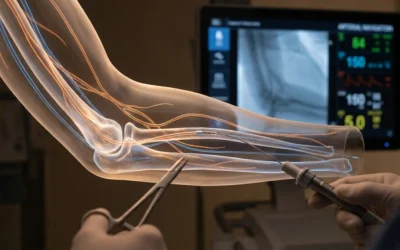
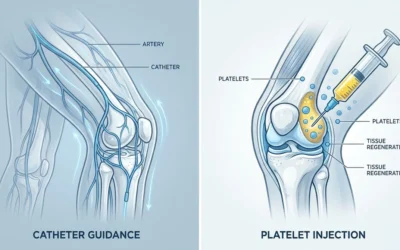
EAE is a minimally invasive, image-guided procedure designed to target abnormal blood vessels associated with chronic painful tissue around the elbow. During the procedure, an interventional radiologist introduces a very small catheter into an artery and uses real-time imaging to navigate toward the vessels supplying the affected area.
Once abnormal vascularity has been carefully identified, embolic material is selectively delivered to reduce blood flow through those specific vessels.
Importantly, EAE does not shut down the normal blood supply to the elbow. The treatment is targeted toward abnormal vascularity while healthy circulation and surrounding tissues are preserved.
The goal is to influence the chronic inflammatory and pain-related environment contributing to persistent symptoms.
EAE does not require a large incision or surgical reconstruction of the elbow and is generally performed on an outpatient basis.
Who May Be a Candidate for EAE?
EAE is not intended for every sore elbow or short-term overuse injury.
It may be considered when a patient has chronic tennis elbow that continues despite appropriate conservative treatment.
An evaluation is necessary because elbow pain can also result from arthritis, nerve compression, ligament injuries, fractures, referred pain, and other conditions. Embolization designed for tennis elbow will not correct an unrelated structural or neurological problem.
The first step is therefore determining why the elbow hurts.
How Can You Reduce Repetitive Stress on Your Elbows?
Prevention often involves reducing unnecessary strain without giving up the activities you enjoy.
Pay attention to technique and ergonomics, particularly when your job involves repetitive hand or wrist movements. Take periodic breaks when possible, and alternate tasks instead of performing one movement continuously for extended periods.
Strengthening the muscles of the forearm, shoulder, and upper arm may also help the entire limb manage physical demands more effectively.
Most importantly, pay attention when discomfort repeatedly returns. Pain is useful information. Addressing an overuse problem early may prevent it from becoming a much more persistent limitation.
Find Answers for Persistent Elbow Pain
Repetitive motion can place considerable stress on the tendons around your elbow, especially when gripping, lifting, or twisting movements are performed frequently. While many overuse injuries improve with appropriate care, chronic tennis elbow can persist and make even basic everyday activities uncomfortable.
At California Joint Pain Institute in Irvine, CA, we evaluate patients with persistent tennis elbow and offer Elbow Artery Embolization (EAE) for appropriately selected cases. This minimally invasive procedure precisely targets abnormal blood vessels associated with chronic painful tissue without requiring major elbow surgery.
If elbow pain continues to interfere with your work, exercise, hobbies, or daily routine despite conservative care, contact California Joint Pain Institute to schedule a consultation and learn whether EAE may be an appropriate option for you.