Shoulder pain can make even the simplest daily activities feel like a challenge. Reaching into a cabinet, fastening a seatbelt, lifting groceries, or getting dressed may suddenly become painful or even impossible. Two of the most common causes of persistent shoulder pain are frozen shoulder and a rotator cuff tear.
Although these conditions share several symptoms, they are very different problems that require different approaches to diagnosis and treatment. Understanding the differences can help you recognize when it’s time to seek medical evaluation and better understand the treatment options available.
Why Shoulder Pain Isn’t Always the Same
The shoulder is one of the body’s most complex joints. It relies on a combination of bones, muscles, tendons, ligaments, and connective tissue working together to provide an exceptional range of motion.
Because so many structures contribute to shoulder function, pain can develop for many different reasons. Two people may experience similar symptoms, such as difficulty lifting an arm, while having entirely different underlying conditions.
This is why obtaining an accurate diagnosis is one of the most important steps toward finding lasting relief.
What Is Frozen Shoulder?
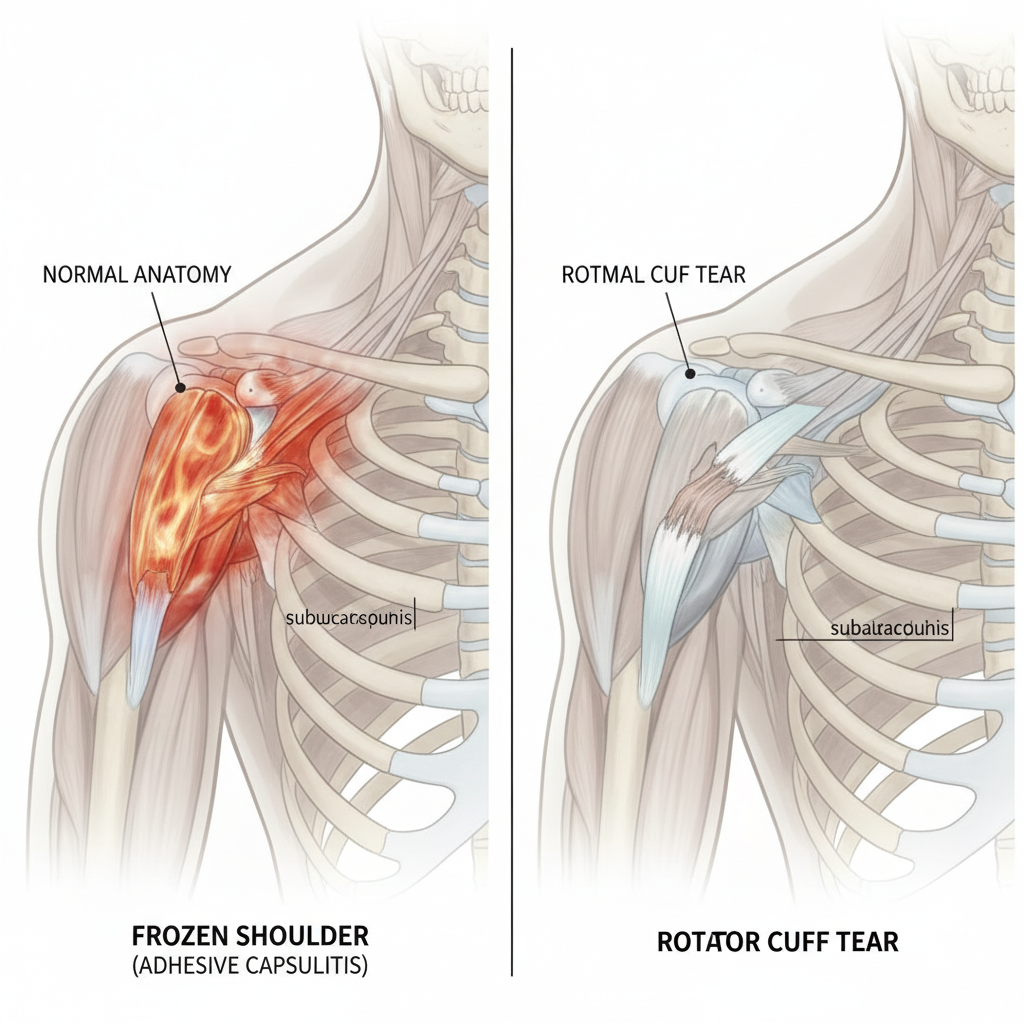
Frozen shoulder, also known as adhesive capsulitis, occurs when the capsule surrounding the shoulder joint becomes inflamed, thickened, and stiff. As the capsule tightens, shoulder movement becomes increasingly restricted.
Unlike many shoulder injuries, frozen shoulder isn’t typically caused by a torn tendon or damaged bone. Instead, the problem develops within the connective tissue that surrounds the joint itself.
The condition often develops gradually over several months and may continue progressing before eventually improving.
What Is a Rotator Cuff Tear?
The rotator cuff is a group of four muscles and their tendons that stabilize the shoulder and allow you to lift and rotate your arm.
A rotator cuff tear occurs when one or more of these tendons becomes partially or completely torn. Tears may happen suddenly after an injury or develop gradually from years of wear and tear.
Rotator cuff injuries are especially common in adults over 40, athletes, and individuals whose jobs involve repetitive overhead movements.
Unlike frozen shoulder, a rotator cuff tear involves damage to the tendons rather than tightening of the joint capsule.
The Biggest Difference: Stiffness vs. Weakness
One of the easiest ways to distinguish these conditions is by the type of movement limitation they cause.
Frozen Shoulder
Frozen shoulder is characterized by significant stiffness.
Patients often find that they physically cannot move the shoulder through its normal range of motion, even if someone else attempts to move the arm for them.
Both active motion (moving the arm yourself) and passive motion (someone else moving your arm) become restricted.
Rotator Cuff Tear
A rotator cuff tear usually causes weakness rather than severe stiffness.
Many patients can still move the shoulder through much of its normal range, but lifting the arm becomes painful or difficult because the injured tendon can no longer generate normal strength.
Passive movement is often much less restricted than it is with frozen shoulder.
Symptoms of Frozen Shoulder
Frozen shoulder typically develops slowly and progresses through three stages.
Common symptoms include:
- Gradual onset of shoulder pain
- Increasing stiffness
- Difficulty reaching overhead
- Trouble reaching behind the back
- Pain that worsens at night
- Difficulty dressing or grooming
- Limited range of motion in every direction
Many patients describe the shoulder as feeling “locked” or “stuck.”
Symptoms of a Rotator Cuff Tear
Symptoms of a rotator cuff tear often depend on the size and severity of the tear.
Common signs include:
- Pain on the outside of the shoulder
- Pain when lifting the arm
- Weakness during overhead activities
- Difficulty lifting heavy objects
- Shoulder pain at night
- Clicking or catching sensations
- Reduced shoulder strength
Large tears may make it difficult to lift the arm at all.
What Causes Frozen Shoulder?
The exact cause of frozen shoulder isn’t always known, but several factors increase the likelihood of developing the condition.
These include:
- Prolonged shoulder immobility
- Recovery after surgery
- Previous shoulder injury
- Diabetes
- Thyroid disorders
- Age between 40 and 60
- More common occurrence in women
Inflammation causes the shoulder capsule to thicken and tighten, restricting movement over time.
What Causes Rotator Cuff Tears?
Rotator cuff tears develop in two primary ways.
Acute Tears
An acute tear occurs after a sudden injury, such as:
- Falling on an outstretched arm
- Lifting something heavy
- Sports injuries
- Shoulder dislocation
Degenerative Tears
Many rotator cuff tears develop gradually from years of repetitive use.
Risk factors include:
- Aging
- Repetitive overhead work
- Throwing sports
- Construction work
- Painting
- Poor posture
- Previous shoulder injuries
Degenerative tears become more common as tendon tissue naturally weakens with age.
How Are These Conditions Diagnosed?
Because the symptoms can overlap, physicians often use several methods to determine the underlying cause.
Diagnosis may include:
- Medical history
- Physical examination
- Range of motion testing
- Strength testing
- X-rays
- Ultrasound
- MRI
During the examination, physicians evaluate both active and passive shoulder movement. Severe loss of passive motion often points toward frozen shoulder, while preserved passive movement with weakness may suggest a rotator cuff tear.
Imaging studies help confirm the diagnosis and rule out other shoulder conditions.
Treatment Options for Frozen Shoulder
Many patients begin with conservative treatment, including:
- Physical therapy
- Home stretching exercises
- Anti-inflammatory medications
- Corticosteroid injections
- Activity modification
Because frozen shoulder often improves slowly over time, patients are sometimes advised to wait while continuing therapy. However, this process can take many months or even years, and symptoms may significantly affect quality of life during that time.
For patients with persistent symptoms, newer minimally invasive procedures such as Shoulder Artery Embolization (SAE) are emerging as an additional treatment option. SAE targets the abnormal blood vessels associated with chronic inflammation, with the goal of reducing pain and improving shoulder mobility without major surgery.
Treatment Options for Rotator Cuff Tears
Treatment depends on the severity of the tear.
Smaller tears may improve with:
- Physical therapy
- Anti-inflammatory medications
- Corticosteroid injections
- Activity modification
Larger or complete tears may require surgical repair, particularly in younger or highly active individuals.
Because rotator cuff tears involve structural damage to the tendon, treatment differs significantly from frozen shoulder.
When Should You See a Specialist?
You should seek medical evaluation if shoulder pain:
- Persists for several weeks
- Continues to worsen
- Significantly limits arm movement
- Causes weakness
- Interferes with sleep
- Prevents normal daily activities
Early diagnosis can help identify the cause of your symptoms and guide appropriate treatment before shoulder function declines further.
Getting the Right Diagnosis Is the First Step
Although frozen shoulder and rotator cuff tears can both cause shoulder pain, they are distinct conditions with different underlying causes. Frozen shoulder is primarily characterized by progressive stiffness and restricted motion, while rotator cuff tears are more commonly associated with tendon damage, weakness, and pain during movement.
Because these conditions require different treatment approaches, obtaining an accurate diagnosis is essential.
At California Joint Pain Institute, we evaluate patients experiencing chronic shoulder pain and help determine the source of their symptoms. For individuals with persistent frozen shoulder, we also offer advanced minimally invasive treatment options such as Shoulder Artery Embolization that may help reduce inflammation and improve mobility without major surgery.
If shoulder pain is limiting your daily activities or quality of life, contact us today to schedule a consultation and learn more about your treatment options.