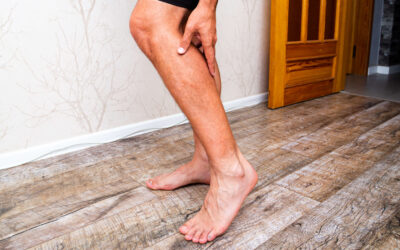
If you’ve ever found yourself wondering, “Why do my knees hurt when I walk?”, you’re not alone. Knee pain is one of the most common musculoskeletal complaints among adults of all ages. Whether you’re taking a leisurely stroll around the neighborhood, climbing a flight of stairs, or simply walking through the grocery store, discomfort in your knees can quickly make everyday activities frustrating.
The good news is that knee pain while walking isn’t a diagnosis. It’s a symptom. Many different conditions can contribute to knee pain, and identifying the underlying cause is the first step toward finding relief.
In this article, we’ll explore some of the most common reasons your knees may hurt when you walk, when it’s time to seek medical attention, and the treatment options that may help you get back to moving comfortably.
How the Knee Works
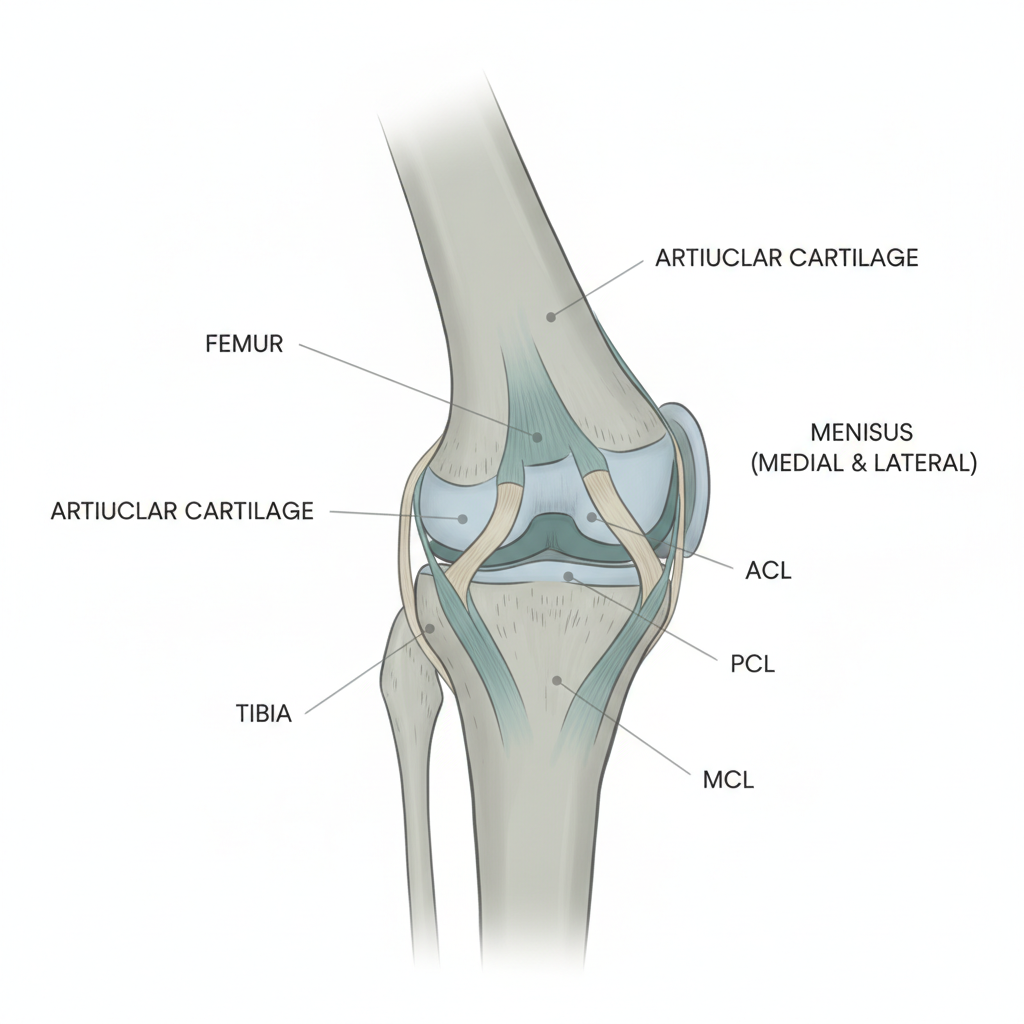
The knee is one of the largest and most complex joints in the body. It connects the thigh bone (femur) to the shin bone (tibia), with the kneecap (patella) helping protect the front of the joint.
Several important structures work together to keep the knee moving smoothly, including:
- Cartilage, which cushions the bones
- Ligaments that stabilize the joint
- Tendons that connect muscles to bone
- Menisci, which act as shock absorbers
- Muscles that support movement
- Synovial tissue, which produces lubricating joint fluid
When any of these structures become irritated, inflamed, or damaged, walking can become painful.
Knee Osteoarthritis
One of the most common reasons knees hurt while walking is knee osteoarthritis.
Osteoarthritis develops when the cartilage that cushions the joint gradually wears away over time. As the protective cartilage becomes thinner, the joint experiences increased friction, which can lead to pain, stiffness, swelling, and reduced mobility.
People with knee osteoarthritis often notice symptoms such as:
- Pain that worsens with activity
- Morning stiffness
- Swelling around the joint
- Difficulty walking long distances
- Pain when climbing or descending stairs
- A grinding or cracking sensation during movement
Although osteoarthritis is more common with age, previous injuries, repetitive stress, excess body weight, and genetics can all increase the likelihood of developing the condition.
Overuse Injuries
Sometimes knee pain isn’t caused by arthritis at all.
Repetitive activities such as running, hiking, cycling, or jobs that require frequent kneeling or squatting can place repeated stress on the knee joint.
Overuse injuries may cause:
- Tendon irritation
- Muscle strain
- Inflammation around the kneecap
- Pain that worsens with continued activity
Unlike sudden injuries, overuse conditions often develop gradually and may improve with rest and activity modification if addressed early.
Meniscus Tears
The menisci are two C-shaped pieces of cartilage that help cushion and stabilize the knee.
A meniscus tear may occur suddenly during sports or develop gradually as the cartilage weakens with age.
Symptoms often include:
- Pain while walking
- Swelling
- Catching or locking sensations
- Difficulty fully straightening the knee
- Pain when twisting or squatting
Some smaller tears respond well to conservative treatment, while larger injuries may require additional evaluation.
Ligament Injuries
Ligaments help stabilize the knee during movement.
Injuries to the ACL, MCL, PCL, or LCL commonly occur during sports, falls, or sudden twisting motions.
Signs of a ligament injury may include:
- Sudden pain after injury
- Swelling
- Knee instability
- A feeling that the knee may “give out”
- Difficulty bearing weight
Unlike osteoarthritis, ligament injuries often develop suddenly rather than gradually.
Patellofemoral Pain Syndrome
Patellofemoral pain syndrome, sometimes called “runner’s knee,” occurs when the kneecap does not move smoothly over the end of the thigh bone.
Pain is usually felt in the front of the knee and often worsens during:
- Walking downhill
- Climbing stairs
- Running
- Sitting for long periods
- Squatting
The condition is especially common in active individuals but can affect anyone.
Bursitis
Small fluid-filled sacs called bursae help reduce friction between tissues around the knee.
When one of these bursae becomes inflamed, a condition known as bursitis develops.
Symptoms may include:
- Localized swelling
- Tenderness
- Warmth
- Pain while walking or kneeling
Bursitis often improves with rest, anti-inflammatory treatment, and avoiding activities that aggravate the condition.
Why Does Knee Pain Sometimes Feel Worse While Walking?
Walking places repeated pressure on the knee joint. Each step requires the joint to absorb forces several times your body weight.
If the knee is already inflamed or damaged, these repeated forces can increase discomfort.
Pain may become especially noticeable when:
- Walking long distances
- Walking uphill or downhill
- Climbing stairs
- Carrying heavy objects
- Walking on uneven ground
The location of the pain can also provide clues about the underlying condition. Pain at the front of the knee may suggest one issue, while pain along the sides or deep within the joint may indicate another.
When Should You See a Specialist?
Occasional soreness after physical activity is normal, but persistent knee pain should not be ignored.
You should consider seeking medical evaluation if:
- Pain lasts more than a few weeks
- Walking becomes increasingly difficult
- Swelling continues to return
- The knee feels unstable
- You notice reduced range of motion
- Pain interferes with work, exercise, or daily activities
An accurate diagnosis can help identify the cause of your symptoms and guide the most appropriate treatment plan.
How Knee Pain Is Diagnosed
A physician will typically begin by reviewing your symptoms, medical history, and activity level.
The evaluation may include:
- A physical examination
- Range of motion testing
- Assessment of joint stability
- Review of previous injuries
- X-rays
- MRI or other imaging studies if needed
These tools help determine whether your symptoms are related to arthritis, tendon injuries, ligament damage, cartilage problems, or another condition.
Treatment Options for Knee Pain
Treatment depends on the underlying cause of the pain.
For many patients, conservative treatments are the first step and may include:
- Physical therapy
- Activity modification
- Weight management
- Anti-inflammatory medications
- Knee braces
- Corticosteroid injections
- Hyaluronic acid injections
Many people experience meaningful improvement with these approaches, particularly during the early stages of knee problems.
When Conservative Treatments Aren’t Enough
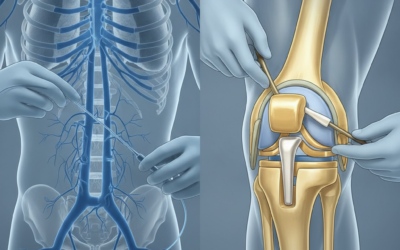
If knee pain continues despite conservative care, additional options may be available. For patients with knee osteoarthritis, one minimally invasive treatment is Genicular Artery Embolization (GAE).
Unlike knee replacement surgery, GAE does not remove or replace the joint. Instead, it targets the small abnormal blood vessels associated with chronic inflammation in the knee.
Using advanced imaging guidance, an interventional radiologist delivers tiny embolic particles to reduce blood flow to these inflamed vessels. The goal is to decrease inflammation, reduce pain, and improve mobility while preserving the natural knee joint.
For some patients, GAE may provide an alternative to more invasive procedures or help delay the need for knee replacement surgery.
Don’t Ignore Persistent Knee Pain
Knee pain while walking is common, but it should not be accepted as an inevitable part of aging. Whether your symptoms are caused by osteoarthritis, an overuse injury, or another condition, identifying the underlying problem is the first step toward improving your mobility and quality of life.
At California Joint Pain Institute, we specialize in evaluating chronic knee pain and helping patients understand the treatment options available for their condition. For individuals with knee osteoarthritis, we also offer advanced, minimally invasive procedures such as Genicular Artery Embolization that target inflammation without the need for major surgery.
If knee pain is making it difficult to enjoy your daily activities, contact us today to schedule a consultation. Our team can help determine the cause of your symptoms and work with you to develop a personalized treatment plan focused on helping you move more comfortably.