Joint pain is often blamed on age, overuse, or an old injury that never quite healed. While these factors can certainly contribute to discomfort, another process frequently plays an important role: inflammation.
Inflammation is part of the body’s natural response to injury and stress. In the short term, it can help protect damaged tissues and support healing. When inflammation becomes persistent, however, it may contribute to ongoing pain, stiffness, swelling, and changes within the affected tissues.
This relationship is particularly important in conditions such as knee osteoarthritis, tennis elbow, and frozen shoulder. Understanding how inflammation contributes to chronic joint pain can also help explain why newer treatments increasingly focus on the inflammatory process rather than pain alone.
What Is Inflammation?
Inflammation is a normal biological response designed to protect the body. When tissue becomes injured or irritated, the immune system releases chemical signals that increase blood flow and bring cells involved in healing to the affected area.
This response can cause familiar signs such as:
- Swelling
- Warmth
- Tenderness
- Pain
- Temporary stiffness
For example, if you strain a muscle or injure a joint, short-term inflammation is part of the body’s response to that injury.
Problems can develop when inflammation continues beyond the initial healing period or becomes associated with a chronic condition. Instead of resolving, inflammatory activity may persist and contribute to ongoing discomfort.
Acute vs. Chronic Inflammation
Not all inflammation is the same.
Acute inflammation generally develops quickly following an injury or other physical stress. It usually resolves as the affected area recovers.
Chronic inflammation can persist for a much longer period. Rather than being a temporary response, it becomes part of an ongoing cycle involving irritated tissue, inflammatory signals, blood vessels, and pain.
In joint disorders, this chronic inflammatory environment can make movement uncomfortable even when there has not been a recent injury.
How Does Inflammation Cause Joint Pain?
Inflammation can affect pain in several ways.
When inflammatory chemicals are released around a joint, they can increase the sensitivity of nearby nerves. Movements or pressure that might normally be comfortable can begin producing pain.
Inflamed tissues may also swell, creating additional pressure and limiting normal joint movement. Over time, patients may begin moving the affected joint less because movement hurts.
This can create another problem: reduced movement may lead to stiffness and weakness, making normal activities even more difficult.
The result can become a cycle of inflammation, pain, limited movement, and declining joint function.
Inflammation and Knee Osteoarthritis
Knee osteoarthritis provides an important example of the relationship between inflammation and chronic joint pain.
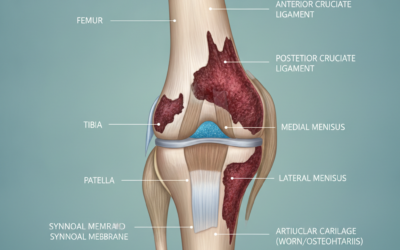
Osteoarthritis is commonly associated with deterioration of the cartilage that cushions the knee. However, the condition involves more than cartilage alone.
The synovium, a thin layer of tissue lining the joint, can also become inflamed. This is sometimes referred to as synovitis.
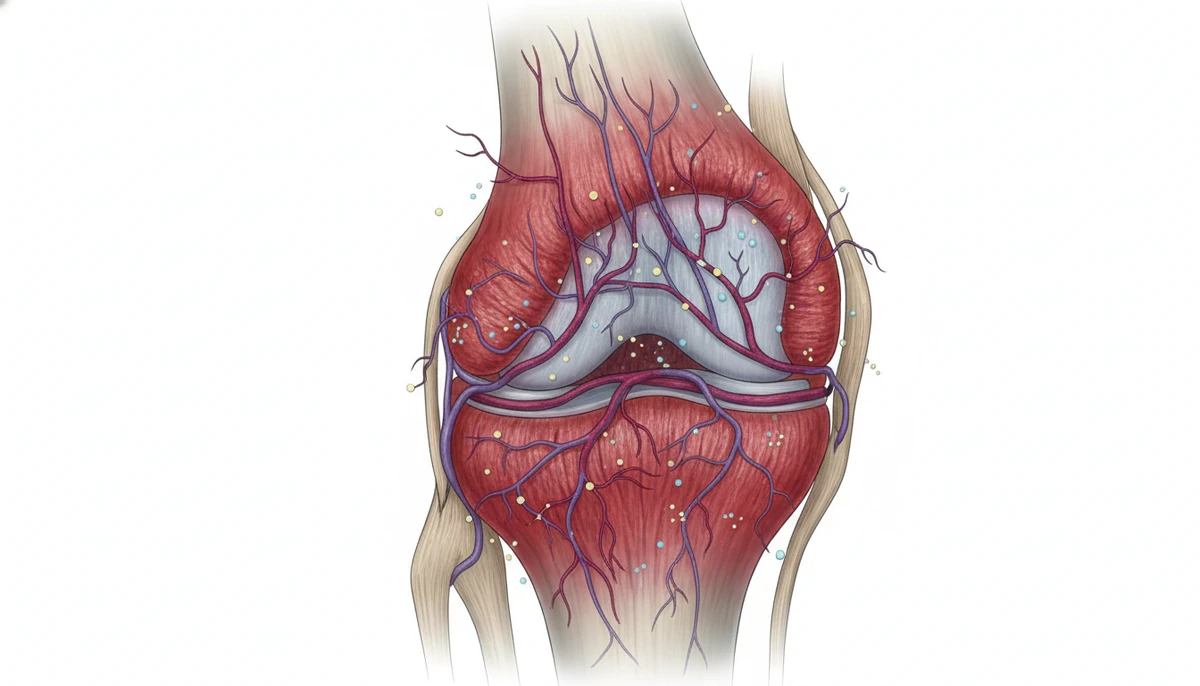
As inflammatory activity continues, changes can occur in the network of small blood vessels surrounding the affected tissues. Increased vascularity, or the formation of additional small blood vessels, has been associated with inflammation and pain in osteoarthritis.
This helps explain why the amount of visible cartilage damage does not always perfectly match how much pain a person experiences. Two patients can have similar X-rays yet report very different symptoms.
Inflammation is one of several factors that may help account for those differences.
Inflammation and Tennis Elbow
Tennis elbow, or lateral epicondylitis, is another condition in which persistent tissue changes can contribute to chronic pain.
Tennis elbow develops around the tendons connecting the forearm muscles to the outside of the elbow. Repeated gripping, lifting, twisting, or wrist movements can place stress on these tendons.
Despite the name, you don’t have to play tennis to develop it.
Many cases improve with rest, activity modification, physical therapy, or other conservative care. For some patients, however, symptoms continue for months.
In chronic cases, changes in the affected tendon and surrounding blood vessels can contribute to persistent discomfort. This is one reason simply “waiting it out” isn’t always satisfactory for people whose elbow pain continues to interfere with work, hobbies, or everyday tasks.
Inflammation and Frozen Shoulder
Inflammation also plays an important role in frozen shoulder, or adhesive capsulitis.
Frozen shoulder affects the capsule of connective tissue surrounding the shoulder joint. Inflammatory changes can occur early in the condition, followed by thickening and tightening of the joint capsule. As the capsule becomes increasingly restricted, patients may experience both pain and a substantial loss of movement.
Simple activities such as reaching into a cabinet, putting on a shirt, fastening a seatbelt, or sleeping comfortably can become difficult. Frozen shoulder often progresses slowly and can last for an extended period. Although it may eventually improve, living with significant pain and restricted movement while waiting for the condition to resolve can be challenging.
Why Do Abnormal Blood Vessels Matter?
One particularly interesting connection between inflammation and chronic musculoskeletal pain involves abnormal small blood vessels that develop around persistently inflamed tissue.
The body can form additional blood vessels in response to ongoing inflammatory signals, a process known as angiogenesis.
These vessels can become part of the chronic inflammatory environment. New nerve fibers may also develop alongside this increased vascularity, potentially contributing to persistent pain signaling.
This relationship between inflammation, abnormal blood vessel growth, and pain has led physicians to explore treatments that specifically target these vessels. Rather than simply masking pain, these approaches aim to interrupt part of the inflammatory process contributing to symptoms.
How Is Inflammation-Related Joint Pain Treated?
Treatment depends on the underlying condition, severity of symptoms, and the individual patient.
Conservative care commonly begins with approaches such as:
- Activity modification
- Physical therapy
- Appropriate exercise
- Anti-inflammatory medications
- Corticosteroid injections
- Bracing or supportive devices
These treatments can be effective for many patients.
The challenge arises when symptoms persist despite appropriate conservative care. Historically, some patients faced a large gap between conservative treatments and more invasive procedures, particularly when pain continued but major surgery was not yet appropriate or desirable.
Advances in interventional radiology are providing another potential option for certain patients.
Targeting Inflammation With Artery Embolization
Artery embolization for joint pain is a minimally invasive, image-guided approach that targets small abnormal blood vessels associated with chronic inflammation.
At California Joint Pain Institute, these procedures include:
Genicular Artery Embolization (GAE) for knee osteoarthritis, which targets abnormal vascularity associated with inflammation around the knee.
Elbow Artery Embolization (EAE) for chronic tennis elbow, which targets abnormal blood vessels associated with the painful area around the affected tendon.
Shoulder Artery Embolization (SAE) for frozen shoulder, which targets abnormal vascularity associated with inflammation around the shoulder.
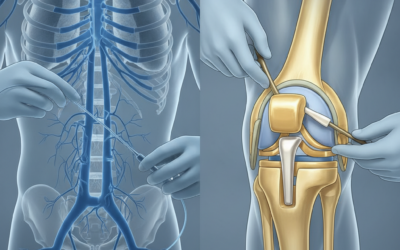
During these procedures, a physician uses advanced imaging to guide a small catheter to the appropriate arteries. Embolic material is then carefully delivered to reduce blood flow through the targeted abnormal vessels.
The goal is to reduce inflammatory activity and associated pain while preserving the natural joint and surrounding healthy tissues.
Because embolization is minimally invasive, it does not require the large incisions or joint reconstruction associated with major orthopedic surgery.
Is All Chronic Joint Pain Caused by Inflammation?
No. This is an important distinction.
Chronic joint pain can have many causes, including structural injuries, fractures, ligament damage, nerve conditions, advanced joint degeneration, infections, and other medical problems. Inflammation may contribute to pain without being its only cause.
That’s why an accurate diagnosis is essential before choosing a treatment. A procedure intended to address inflammation will not necessarily correct significant mechanical instability or repair a completely torn tendon.
A specialist can evaluate symptoms, medical history, physical findings, and imaging to determine what is most likely contributing to persistent pain.
Understanding the Source of Your Joint Pain
Chronic joint pain is more complex than simply “wear and tear.” In conditions such as knee osteoarthritis, tennis elbow, and frozen shoulder, persistent inflammation and changes in small blood vessels may play an important role in ongoing symptoms.
Understanding that connection has opened the door to new ways of approaching joint pain, including targeted, minimally invasive embolization procedures for appropriately selected patients.
At California Joint Pain Institute in Irvine, CA, we focus on helping patients understand the source of chronic joint pain and explore image-guided options when conservative treatments have not provided sufficient relief.
If ongoing knee, elbow, or shoulder pain is limiting your mobility or interfering with everyday activities, contact California Joint Pain Institute to schedule a consultation and learn whether a minimally invasive approach may be appropriate for you.