Shoulder pain can make surprisingly simple activities difficult. Reaching into a cabinet, putting on a jacket, fastening a seatbelt, or even finding a comfortable sleeping position may become challenging when your shoulder begins to hurt and lose mobility.
Sometimes shoulder discomfort improves with rest and conservative care. Frozen shoulder, however, can become progressively more restrictive and may persist for an extended period. If pain and stiffness continue to worsen or interfere with your daily life, it may be time to see a specialist.
Knowing when to seek help is important because not every painful or stiff shoulder is frozen shoulder. A specialist can determine what is causing your symptoms, rule out other shoulder conditions, and help you understand the treatment options available.
What Is Frozen Shoulder?
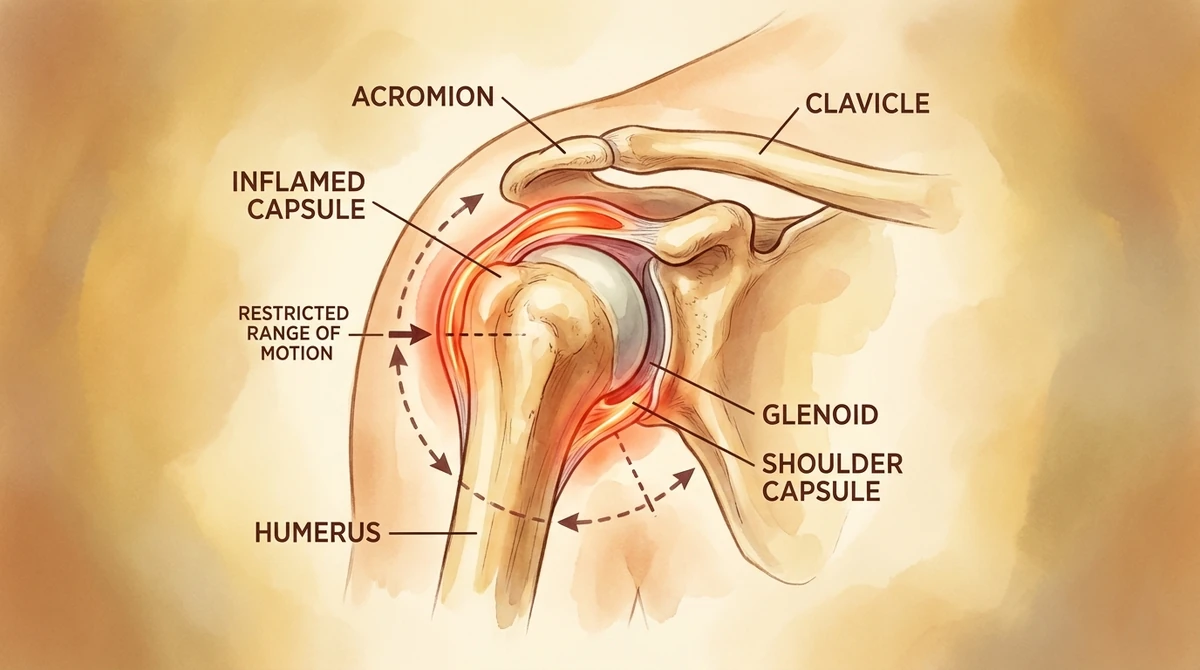
Frozen shoulder, medically known as adhesive capsulitis, is a condition characterized by pain and a significant loss of shoulder movement.
The shoulder joint is surrounded by a flexible capsule of connective tissue. With frozen shoulder, inflammatory changes can occur within this capsule. Over time, the capsule can thicken and tighten, restricting the shoulder’s normal range of motion.
Frozen shoulder typically develops gradually rather than following a single obvious injury.
Common symptoms include:
- Persistent shoulder pain
- Increasing stiffness
- Difficulty raising the arm
- Trouble reaching behind your back
- Reduced ability to rotate the shoulder
- Pain that interferes with sleep
- Difficulty dressing or performing household activities
A defining characteristic is that both active and passive shoulder movement become restricted. In other words, you may have trouble moving your shoulder yourself, and another person may also be unable to move it through its normal range.
How Does Frozen Shoulder Progress?
Frozen shoulder is commonly described as progressing through three stages: freezing, frozen, and thawing.
The Freezing Stage
Pain typically becomes increasingly noticeable during the freezing stage. As the condition progresses, shoulder movement also becomes more restricted.
This stage can be particularly uncomfortable at night and may make it difficult to sleep on the affected side.
The Frozen Stage
Pain may become less intense for some people, but stiffness can remain significant. Everyday movements such as reaching overhead or behind the body may become extremely limited.
The Thawing Stage
Shoulder mobility gradually begins to improve.
The entire process can take many months and, for some patients, considerably longer. Although frozen shoulder may improve naturally, the prolonged course can be difficult for patients whose symptoms interfere with work, sleep, exercise, or independence.
When Should You See a Specialist for Frozen Shoulder?
You do not necessarily need specialist treatment for every minor shoulder ache. However, certain symptoms deserve closer evaluation.
Your Shoulder Is Becoming Progressively Stiffer
One of the clearest reasons to seek evaluation is a noticeable and continuing loss of motion.
You may initially have difficulty reaching high shelves. Later, you might struggle to put on a shirt, wash your hair, or reach into a back pocket.
Progressively worsening stiffness is particularly characteristic of frozen shoulder and is worth discussing with a healthcare provider.
Pain and Stiffness Have Lasted for Weeks
Temporary soreness following physical activity may resolve on its own. Frozen shoulder tends to behave differently.
If shoulder pain and restricted movement persist for several weeks without meaningful improvement or continue getting worse, an evaluation can help determine the underlying cause.
Waiting indefinitely may mean spending unnecessary time dealing with a condition for which treatment options are available.
Shoulder Pain Is Interfering With Sleep
Frozen shoulder frequently causes nighttime discomfort.
You may find it difficult to sleep on the affected side or wake when changing positions. Poor sleep can then affect energy, concentration, mood, and overall quality of life.
When shoulder pain regularly interrupts sleep, it is reasonable to seek medical attention rather than continuing to work around the problem.
Everyday Tasks Are Becoming Difficult
Shoulder mobility plays a role in countless daily activities.
Frozen shoulder may make it difficult to:
- Get dressed
- Put on a coat
- Fasten a bra
- Wash or style your hair
- Reach into cabinets
- Drive comfortably
- Put on a seatbelt
- Carry out certain work duties
When loss of mobility begins changing how you perform everyday tasks, specialist evaluation can help identify why.
Conservative Treatment Hasn’t Provided Enough Relief
Frozen shoulder is generally treated conservatively at first.
Depending on your circumstances, this may include physical therapy, home stretching, pain or anti-inflammatory medications, and corticosteroid injections.
Many patients improve with these approaches. Others continue experiencing significant pain and restricted mobility despite following their treatment plan.
If conservative treatment is not producing sufficient progress, a specialist can discuss whether additional options should be considered.
Why Is an Accurate Diagnosis Important?
Not every painful shoulder is frozen shoulder.
Several conditions can produce overlapping symptoms, including:
- Rotator cuff injuries
- Shoulder arthritis
- Bursitis
- Tendon disorders
- Labral injuries
- Problems originating in the neck
A rotator cuff tear, for example, may cause pain and weakness but often allows more passive movement than frozen shoulder. Osteoarthritis can also produce stiffness, but it involves structural changes within the joint itself.
A physician may use your medical history, physical examination, and imaging when appropriate to distinguish among these possibilities.
Getting the diagnosis right matters because different shoulder conditions require different treatments.
Who Is More Likely to Develop Frozen Shoulder?
Frozen shoulder can affect anyone, but certain factors are associated with a greater likelihood of developing the condition.
It occurs most commonly in middle-aged and older adults. It may also develop after an injury, operation, or other circumstance that keeps the shoulder relatively immobile for an extended period.
Certain medical conditions are associated with an increased risk as well.
However, some patients develop frozen shoulder without a clear explanation.
Regardless of the cause, progressively worsening stiffness should not simply be assumed to be a normal consequence of getting older.
What Happens If You Wait?
Frozen shoulder has traditionally been considered a condition that often improves over time.
For some patients, waiting combined with physical therapy and other conservative treatments is a reasonable strategy. But improvement can be slow, and symptoms may persist for many months or longer.
The question, therefore, isn’t simply whether frozen shoulder can eventually improve. Patients also need to consider how significantly the condition is affecting their lives while they wait.
Months of restricted movement can interfere with exercise, work, sleep, driving, hobbies, and routine self-care.
If symptoms are manageable and steadily improving, continued conservative care may make sense. If you’re experiencing substantial limitations without meaningful progress, a specialist evaluation may help you explore additional options.
What Treatments Can a Specialist Recommend?
Treatment depends on the stage and severity of frozen shoulder as well as your overall health and previous care.
Conservative approaches may include:
- Physical therapy
- Gentle stretching and mobility exercises
- Appropriate medications
- Corticosteroid injections
- Activity modifications
Additional procedures may be considered in persistent cases. The appropriate treatment should be individualized rather than assuming every patient needs the same intervention.
One newer option for appropriately selected patients is Shoulder Artery Embolization (SAE).
What Is Shoulder Artery Embolization?
Shoulder Artery Embolization is a minimally invasive, image-guided procedure designed to target abnormal blood vessels associated with chronic inflammatory activity around the affected shoulder.
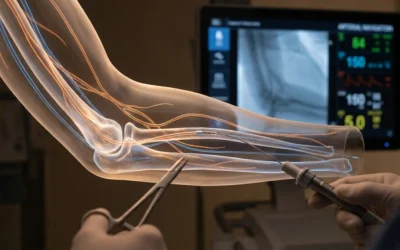
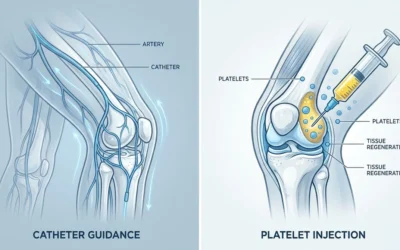
During SAE, an interventional radiologist introduces a very small catheter into an artery. Advanced imaging is used to carefully navigate the catheter toward specific vessels associated with the inflamed shoulder tissues.
Embolic material is then selectively delivered to reduce abnormal blood flow in these targeted vessels.
SAE is not intended to stop the normal blood supply to your shoulder. Healthy circulation is preserved while the physician focuses on abnormal vascularity associated with the painful inflammatory process.
The procedure does not require a large surgical incision or replacement of the shoulder joint and is generally performed on an outpatient basis.
When Might SAE Be Considered?
SAE may be an option for appropriately selected patients whose frozen shoulder symptoms continue despite conservative care.
It is not necessarily the first treatment for newly developed shoulder stiffness, nor is it appropriate for every cause of shoulder pain.
A specialist evaluation is therefore essential. If another condition is responsible for your symptoms, such as a significant rotator cuff injury or advanced structural joint disease, a different treatment approach may be more appropriate.
Don’t Let Shoulder Stiffness Go Unexplained
Frozen shoulder may improve over time, but that doesn’t mean you need to ignore persistent pain or steadily worsening mobility. If shoulder stiffness has lasted for weeks, interferes with sleep or everyday activities, or has not responded sufficiently to conservative care, it may be time to seek a more detailed evaluation.
At California Joint Pain Institute in Irvine, CA, we help patients understand persistent shoulder pain and explore minimally invasive treatment options when appropriate. For select patients with adhesive capsulitis, Shoulder Artery Embolization may provide another option for addressing abnormal vascularity associated with chronic inflammation.
If frozen shoulder is limiting your ability to work, sleep, exercise, or perform everyday activities, contact California Joint Pain Institute to schedule a consultation and learn whether SAE may be appropriate for you.